


Traditional Igbo Ofe Nsala (White Soup) Recipe
March 17, 2026 Chef Joe

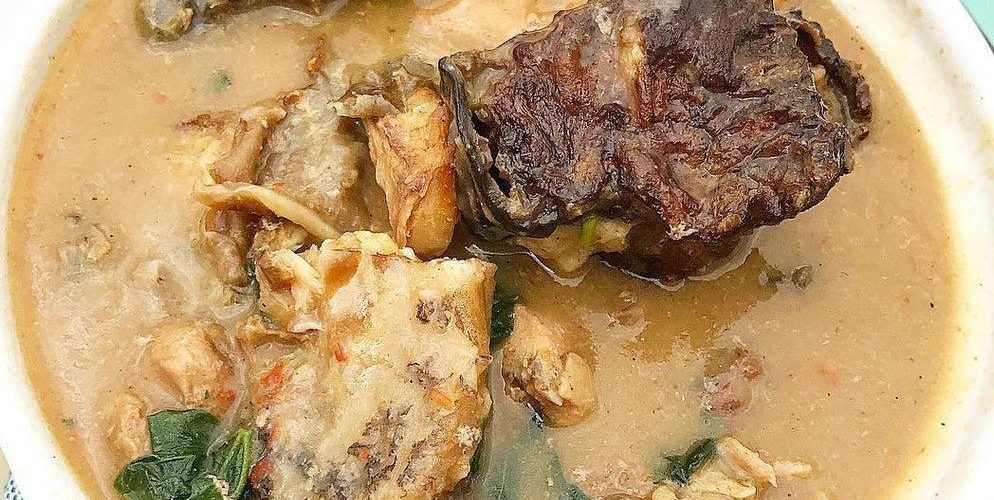
Thus, the traditional name for the world-famous Igbo “White Soup” is “Ofe Sala” or “Ofe Nsala.”
“Ofe” simply means soup in Igbo language, and “Nsala” is the specific name for this white, spicy, and aromatic soup. “Ofe Nsala” or “Ofe Sala” is called “White Soup” because this soup is unique in that it contains absolutely no palm oil, which gives it a milky color due to the pounded yam thickener. “Ofe Nsala” is the ultimate soul food in Igbo land.
This soup is normally given to nursing mothers as a means of helping them recover quickly, and it is also given to honored guests as a mark of high esteem for them. This soup is extremely easy on the stomach but packs a wallop in terms of its herbal heat from Utazi leaves and Uda/Uziza seeds.
Health Benefits Of Ofe Nsala (White Soup)
1. Great source of lean protein
This soup is commonly prepared with fresh catfish or chicken. Catfish contains Omega-3, which is beneficial for your heart, reducing inflammation, etc. It also contains high-quality protein needed for repair and growth of muscles.
2. High in dietary fiber and complex carbs
The thickener used in Ofe Nsala is commonly boiled yams.
– Energy boost: It contains complex carbs, which are broken down to give you energy.
– Digestive aid: It contains dietary fibers, which promote bowel movement.
3. Immune-boosting spices (The “Secret” Ingredients)
The aroma of the soup, which gives it a medicinal feel, is due to the spices used, which include Uda (Negro pepper) and Uziza (Piper Guineense).
– Anti-inflammatory: These spices contain antioxidants, which boost your immunity to fight infections.
– Postpartum recovery: Ofe Nsala is commonly recommended for new mothers in Nigeria. The spices used in the recipe are believed to cause the uterus to contract, flushing out stale blood.
4. Low in fat, ideal for weight management
Unlike other soups such as Egusi or Banga, which contain palm oil, Ofe Nsala does not contain any palm oil, making it an ideal option for those who:
– Need to control their cholesterol levels
– Are on a weight management program
5. Respiratory relief
The combination of Uziza and fresh peppers gives the soup a spicy taste, which is commonly used to relieve a stuffy nose, flu, etc.
INGREDIENTS
| Catfish | 1 Medium (Cut into steaks) | |
| Assorted Meat | 300g (Chicken or Goat meat is traditional) | |
| Stockfish | 100g (Pre-soaked and cleaned) | |
| Yams | 3–4 Medium cubes (Raw, for thickening) | |
| Utazi Leaves | 2–3 Leaves (Finely shredded for a hint of bitterness) | |
| Ground Crayfish | 3 Tablespoons | |
| Ogirri Igbo | 1 Small wrap (Fermented castor seeds) | |
| Nsala Spices | 1 Teaspoon (A blend of ground Uda, Uziza seeds, and Ehuru) | |
| Scotch Bonnet (Atarodo) | 2 Pieces (Blended) | |
| Seasoning Cubes | 2 Cubes | |
| Salt | To taste |
Instructions:-
- Prep the Thickener: Peel the yam cubes and boil them in a separate small pot until very soft. Once cooked, pound them in a mortar or blend with a tiny bit of water until you have a smooth, stretchy paste. Set aside.
- Cook the Base: In a large pot, add your assorted meat and stockfish. Season with one seasoning cube and a pinch of salt. Cook with minimal water until the meat is nearly tender.
- Add the Fish: Carefully add the catfish steaks to the pot. Add more water (about 3–4 cups, depending on how much soup you want).
- Spice it Up: Add the ground crayfish, blended pepper, Nsala spice blend (Uda/Uziza/Ehuru), and the Ogirri. Let it boil for about 10 minutes so the fish absorbs the flavors.
- Thicken the Soup: Take small lumps of the pounded yam paste and drop them into the boiling broth. Cover the pot and allow the heat to melt the yam lumps into the soup. As they melt, the soup will transform from a clear watery broth into a light, creamy consistency.
- The Herbal Finish: Once the soup has reached your desired thickness, add the finely shredded Utazi leaves. Be careful not to add too much; you only want a subtle herbal bitterness.
- Final Simmer: Simmer for another 3–5 minutes. Taste for salt and seasoning, adjusting if necessary.
- Serve: Turn off the heat. Serve hot with Pounded Yam (the most traditional pairing).
Nutrition Facts
Serving Size: 4
Calories Per Serving: 310
% Daily Value
Total Carbohydrate
22g
8%
Cholesterol
75mg
25%
Total Fat
12g
15%
Saturated Fat
3g
15%
Unsaturated Fat
5g
Dietary Fiber
3.5g
13%
Protein
29g
58%
Sodium
420mg
18%
Sugars
1.1g
2%
Prep
20 minCook
35 min💡 Mistakes & Expert Advice
❄️ Storage & Reheating
How to Store
Refrigeration: Store in an airtight container for up to 2–3 days. Because this soup contains fresh Catfish and a starch-based thickener (yam), it spoils faster than oil-based soups.
Freezing: You can freeze Ofe Nsala for up to 2 weeks.
Pro Tip: If freezing, be aware that the yam thickener may "settle" or separate slightly. This is normal and can be fixed during reheating.
Best Way to Reheat
Stovetop (Highly Recommended): Pour the soup into a pot and heat over low-medium heat. If the soup has become too thick (jelly-like) in the fridge, add a tiny bit of warm water and stir very gently to avoid breaking the fish.
Microwave: Use a microwave-safe bowl and heat in 1-minute bursts. Stir gently between intervals.
Important Note: Do not let the soup reach a violent, rolling boil for a long time when reheating, as this will cause the delicate catfish to disintegrate into the broth.






No Comments