


Nigerian Edikang Ikong Soup Recipe
March 17, 2026 Chef Joe

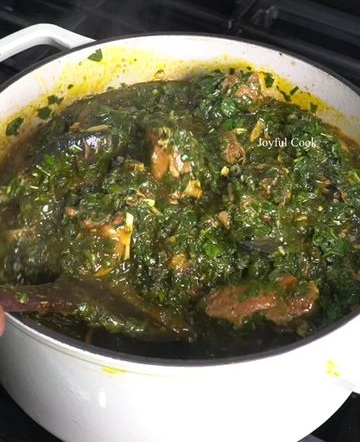
If Afang soup is the heartbeat of the Efik and Ibibio peoples, then Edikang Ikong is their crown jewel. Time and again, people have called it “The King of Nigerian Vegetable Soups,” a true sign of wealth and hospitality. Way back, it was reserved for royalty and special occasions because you needed a lot of high-quality proteins to make it truly authentic.
Unlike most soups, which use thickeners such as cassava (coco-yam) or melon seeds, Edikang Ikong uses only the volume of its veggies—Waterleaf and Pumpkin leaves (Ugu)–to achieve that thick, lush texture. It is a “dry” soup, meaning you do not really add much water while cooking, as the leaves steam in their own juice with a rich base of palm oil and meat stock.
Health Benefits Of Edikang Ikong Soup
1. Powerhouse of Vitamins and Minerals
This soup is rich in vitamins and minerals because of the two main leafy greens used: Waterleaf (Talinum triangulare) and Ugu (Fluted Pumpkin leaves).
– Vitamin A: For clear vision, a strong immune system, etc.
– Vitamin C: An antioxidant that helps with skin, wound healing, etc.
– Iron + Folate: Essential for red blood cell production, preventing anemia, etc.
2. High in Dietary Fiber for Heart and Gastrointestinal Health
The soup is “dry,” meaning there’s barely any water used, but a whole lot of veggies. It’s therefore rich in dietary fiber.
– Digestive Health: Like a natural laxative, dietary fiber helps with bowel movements, preventing constipation.
– Cholesterol Management: The dietary fiber in waterleaf can lower LDL cholesterol by binding to cholesterol in the digestive system.
3. High in Lean Protein + Collagen
The original Edikang Ikong recipe is rich in lean protein from the beef, tripe (shaki), cow skin (ponmo), and dried fish.
– Muscle Health: Provides essential amino acids for growth.
– Joint Health: The stockfish and various meats used in the recipe contain collagen, which is rich in minerals such as phosphorus, calcium, etc.
4. Antioxidant + Anti-Inflammatory Properties
The combination of Ugu leaves and fresh peppers gives the Edikang Ikong soup antioxidant properties, which can reduce the risk of chronic diseases such as cancer, heart disease, etc.
5. Blood Sugar Regulation
The dietary fiber in the Edikang Ikong recipe slows down the absorption of sugar into the bloodstream. When paired with a low-glycemic index fufu (wheat or unripe plantain fufu), Edikang Ikong can be an excellent meal for managing blood sugar levels.
INGREDIENTS
| Pumpkin Leaves (Ugu) | 1kg (Fresh, finely chopped) | |
| Waterleaves | 500g (Fresh, finely chopped) | |
| Assorted Meat | 500g (Beef, Goat meat, Shaki, and Ponmo) | |
| Stockfish & Smoked Fish | 200g (Cleaned and deboned) | |
| Periwinkles | 1 Cup (Traditionally unshelled, but shelled works too) | |
| Palm Oil | 2 Cooking Spoons | |
| Ground Crayfish | 4–5 Tablespoons (Essential for the flavor) | |
| Scotch Bonnet Peppers (Atarodo) | 3-4 Pieces (Blended) | |
| Onion | 1 Medium (Only for boiling the meat) | |
| Seasoning Cubes | 2 Cubes | |
| Salt | To taste |
Instructions:-
- Steam the Proteins: In a large pot, place your assorted meat and stockfish. Season with diced onions, seasoning cubes, and a tiny bit of salt. Cook in its own juices first, then add very little water and cook until the meat is tender.
- Dry the Stock: Ensure that by the time the meat is done, the water in the pot is reduced to a very thick, concentrated stock. You do not want a watery base for Edikang Ikong.
- Add the Seafood: Add the deboned smoked fish and periwinkles to the pot. Let them simmer for 5 minutes.
- The Oil and Pepper Base: Pour in the palm oil, ground crayfish, and blended peppers. Stir and allow to boil for about 5–7 minutes until the oil integrates and the “raw” pepper taste is gone.
- Waterleaves First: Add the chopped waterleaves first. Stir and cook for 3 minutes. Waterleaves contain a lot of moisture, which will provide the “soup” element.
- The Ugu Finish: Add the chopped pumpkin leaves (Ugu) on top. Stir thoroughly to combine both vegetables with the meat and oil.
- Final Simmer: Lower the heat and let the soup simmer for just 3–5 minutes. You want the vegetables to soften but remain a vibrant dark green.
- Taste and Adjust: Taste for salt. Because of the crayfish and stockfish, you may not need much extra salt.
- Serve: Turn off the heat. Serve hot with Pounded Yam, Fufu, or Eba.
Nutrition Facts
Serving Size: 6
Calories Per Serving: 430
% Daily Value
Total Carbohydrate
12g
4%
Cholesterol
95mg
32%
Total Fat
29g
37%
Saturated Fat
12g
60%
Unsaturated Fat
11g
Trans Fat
0.01g
Dietary Fiber
6g
21%
Protein
34g
68%
Sodium
490mg
21%
Sugars
1.2g
2%
Prep
45 minCook
30 min💡 Mistakes & Expert Advice
❄️ Storage & Reheating
How to Store
3–5 days in the refrigerator (airtight container) or up to 1 month in the freezer
Best Way to Reheat
Stovetop (Recommended): Place your portion in a small pot over low-medium heat. Add 1–2 tablespoons of water or stock to loosen the congealed palm oil. Stir gently until warmed through to keep the vegetables from becoming mushy.
Microwave: Heat in a microwave-safe bowl in 30-second intervals, stirring in between. Stop as soon as it is hot to prevent the oil from separating and the leaves from darkening.
Pro Tip: Only reheat the portion you plan to eat immediately. Repeatedly warming the entire pot will cause the vegetables to lose their flavor and spoil faster.








No Comments