


Traditional Nigerian Afang Soup Recipe
March 17, 2026 Chef Joe

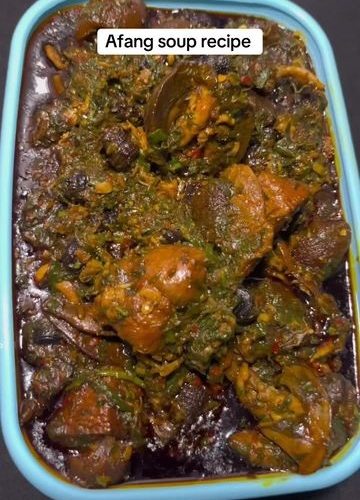
If there’s one dish that captures the essence of the culinary soul of the Efik and Ibibio peoples of South-South Nigeria (Cross River and Akwa Ibom states), then that dish is Afang Soup. This is not just any meal, mind you, but a legendary, nutrient-rich feast of texture and taste.
What makes Afang Soup magic is that you use not one, not two, but two different leaves: the earthy, a bit crunchy Afang leaves (Wild Spinach/Okazi) and Waterleaves, which have a silky, tender texture. When done well, this soup is thick, oily, and incredibly savory, often brimming with a ‘forest’ of meats and sea foods. Some even say it’s one of the most ‘medicinal’ soups you can have, especially with all that wild Afang leaf fiber and antioxidants!
Health Benefits Of Afang Soup
1. Really good for your digestion
The Afang leaves are rich in fiber. This is good for:
– Stopping constipation: the fiber acts as a laxative, moving food through the body quicker.
– Staying full longer: the fiber ensures that one does not eat too much.
2. Strong antioxidant punch
The Afang leaves are rich in phenolics and flavonoids.
– Protection of body cells: the antioxidants in the leaves reduce the risk of chronic illness and aging.
– Boosting the immune system: the vitamin C in the waterleaf ensures the body is well protected against infections.
3. Strong bones and teeth
The Afang soup is rich in essential minerals.
– Calcium and magnesium: these are essential for healthy bones and prevention of osteoporosis.
– Iodine and zinc: the periwinkles and seafood in the Afang soup contain iodine and zinc, which are essential for the thyroid gland.
4. Blood health and beating anemia
If Ugu is added, the Afang leaves provide a lot of iron.
– More red blood cells: this is good for those who are sickly or suffering from low levels of iron.
5. Heart health and good fats
The Afang soup contains palm oil but is rich in crayfish, stockfish, and periwinkles.
– Omega-3 fatty acids: the good fats are essential for heart health.
– Clear vision: the vitamin A in the palm oil and Afang leaves ensures that the eyes are well taken care of.
INGREDIENTS
| Afang Leaves (Ukazi) | 4 Cups (Dried or fresh, finely ground/pounded) | |
| Waterleaves | 1kg (Fresh, finely chopped) | |
| Palm Oil | 2.5 Cooking Spoons (Afang requires a generous amount of oil) | |
| Assorted Meat | 500g (Beef, Shaki, Cow Skin/Ponmo) | |
| Stockfish & Dry Fish | 200g (Cleaned and deboned) | |
| Fresh Periwinkles | 1 Cup (Shelled or unshelled) | |
| Ground Crayfish | 4 Tablespoons | |
| Scotch Bonnet Peppers (Atarodo): | 3-4 Pieces (Blended) | |
| Onion | 1 Medium (For boiling meat only) | |
| Seasoning Cubes: | 2-3 Cubes | |
| Salt | To taste |
Instructions:-
- Prep the Greens: If using fresh Afang, wash and grind/pound it until it is very fine. For the Waterleaves, wash thoroughly and chop into small bits. Set both aside.
- Cook the Proteins: In a large pot, season your assorted meat and stockfish with diced onions, seasoning cubes, and a little salt. Add a small amount of water and cook until the meat is tender.
- Add Seafood: Add the deboned dry fish and periwinkles to the pot. Let them simmer with the meat for another 5–8 minutes so the flavors meld.
- Introduce Waterleaves: Add the chopped waterleaves to the pot. Stir well and allow them to cook down for about 3–5 minutes. You will notice the waterleaves release a lot of liquid—this is normal.
- Oil and Spice: Add the palm oil, ground crayfish, and blended peppers. Stir and leave to boil for 5 minutes until the oil integrates with the waterleaf juice.
- The Afang Finish: Lower the heat and add the ground Afang leaves. Stir thoroughly until the leaves are well distributed.
- Simmer: Allow the soup to simmer on low heat for 3–5 minutes. The Afang should soften slightly but still retain its characteristic texture.
- Final Seasoning: Taste for salt and seasoning. Adjust if necessary. Once the oil begins to float slightly on top, the soup is ready.
- Serve: Turn off the heat. Serve hot with Pounded Yam, Eba, or Fufu.
Nutrition Facts
Serving Size: 6
Calories Per Serving: 460
% Daily Value
Total Carbohydrate
14g
5%
Cholesterol
98mg
33%
Total Fat
32g
41%
Saturated Fat
14g
70%
Unsaturated Fat
12g
Trans Fat
0.02g
Dietary Fiber
8g
29%
Protein
30g
60%
Sodium
540mg
23%
Sugars
1.5g
3%
Prep
40 minCook
35 min💡 Mistakes & Expert Advice
❄️ Storage & Reheating
How to Store
Afang Soup stays fresh in the refrigerator for up to 4 to 5 days when kept in an airtight container. If you want to keep it longer, you can freeze it for up to 1 month.
Note that the waterleaves may release a bit more liquid after thawing, which is normal.
Best Way to Reheat
For the best results, reheat on the stovetop over low heat. If the soup has thickened too much in the fridge, add a very tiny splash of water or a teaspoon of palm oil to loosen it up. Avoid high heat or long microwave sessions, as this can make the Afang leaves tough and "rubbery."








No Comments